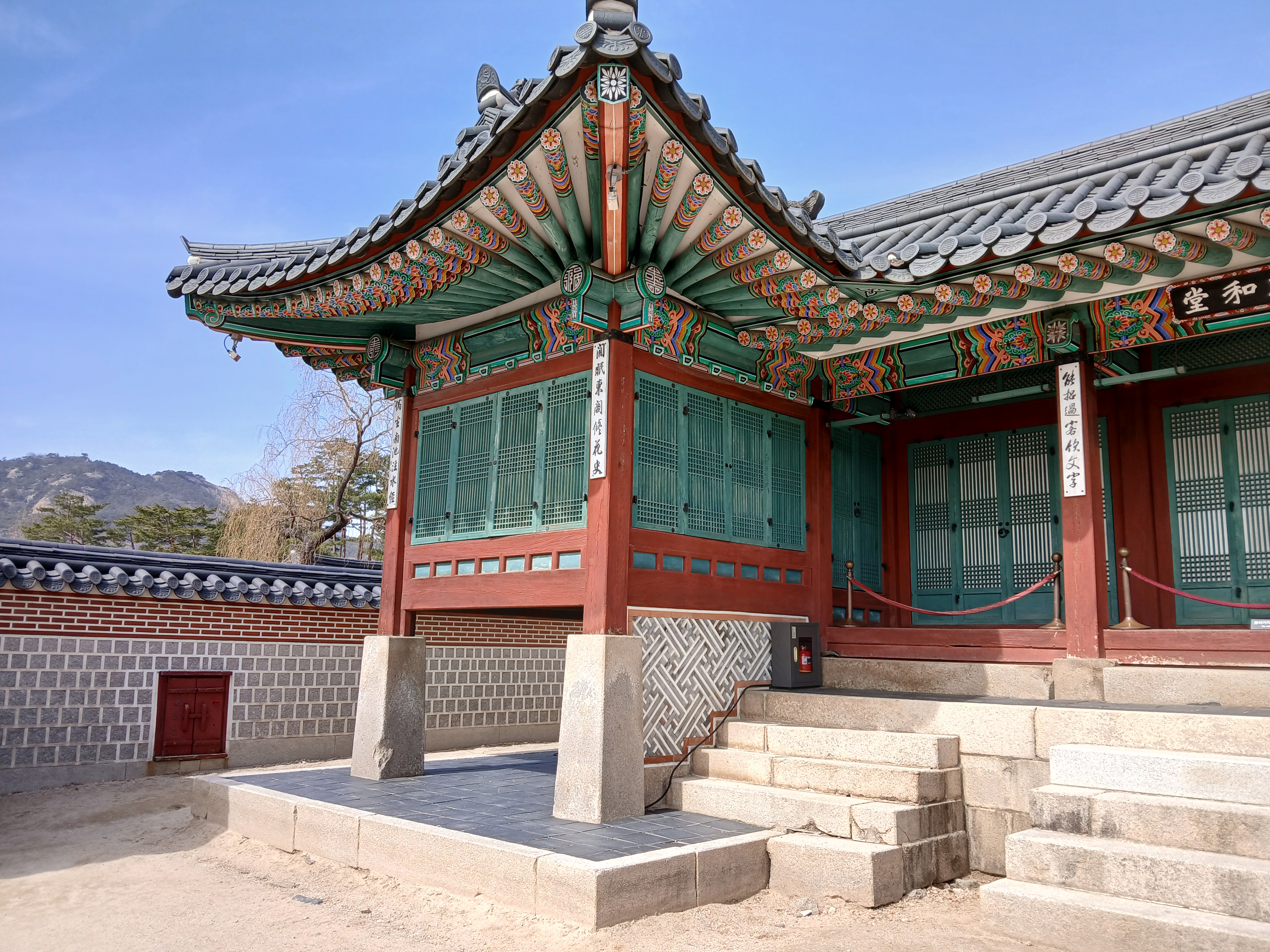
The city works best through contrast: a royal palace, a lived-in hanok district, a market, a hill and a neon neighborhood.
01Gyeongbokgung and Gwanghwamun
A strong starting point for old Seoul: palace courtyards, gates and mountains behind them.
- Go in the morning
- Give the palace real time
- Pair it with Bukchon
02Bukchon Hanok Village
A historic residential district between the palaces. Residential is the key word.
- Respect visiting hours
- Keep your voice down
- Do not use doorways as photo props
03Namsan and N Seoul Tower
A classic city panorama; the tower operates year-round.
- Check cable-car details
- Aim for sunset
- Watch the weather
04Gwangjang Market
Korea’s first permanent market and an easy introduction to street food.
- Arrive hungry
- Walk the lane first
- Skip one-hour viral queues
05Seoul City Wall and Naksan
The historic wall stretches about 18.6 km over Seoul’s hills; choose one section rather than conquering all of it.
- Naksan is manageable
- Bring water
- Evening views are excellent
06Hongdae
A youthful district of music, cafés and late-night energy.
- Best in the evening
- Do not plan an early bedtime
- Leave time to wander
07Han River
Riverside parks are the right finale when landmarks have started judging your schedule.
- Bring takeaway food
- Check weather
- Go after dark for bridge views
Money without surprises
- Seoul subway base fare with T-money: 1,400 KRW
- Single-use subway ticket: 1,500 KRW base fare
- A T-money card itself starts at around 2,500 KRW; balance is separate
- Check other prices close to your trip; old screenshots age badly in Seoul
What matters
- 01Buy T-money on day one
- 02Use Naver Map or KakaoMap
- 03Remember exit numbers at big stations
- 04In Bukchon, remember people actually live there
- 05Do not schedule four distant districts in one day
- 06Leave one evening completely unplanned
Seoul rewards the traveler who knows when to stop rushing.